Why Shoes Wear on the Outside Heel, and What it Could Mean for You
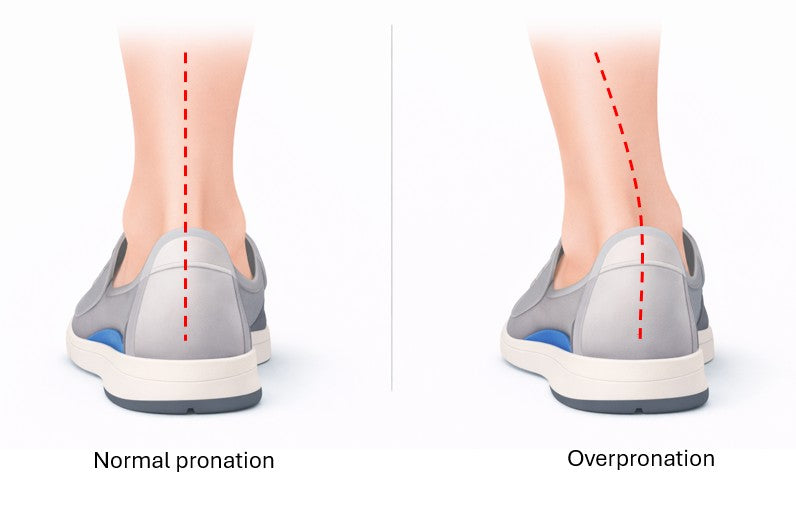
If your outside heel is wearing out quickly, that can be normal. The useful question is what happens next. When outside heel wear is combined with inward collapse, inside edge wear, or a shoe that leans inward, it can point to overpronation and stability issues.
Quick answer:
Often normal: mild outside heel scuffing without inward shoe tilt, inside edge breakdown, or ongoing foot fatigue
Worth checking: outside heel wear plus inward roll, arch soreness, knees drifting inward, or one shoe collapsing faster than the other
Mild outside heel contact can be normal. The real concern is what happens next. Excess inward roll after landing is what usually signals a stability problem.
If the pattern points to instability, the usual next step is better support inside the shoe
The best first choice usually depends on the type of shoe you wear most.
When outside heel wear is normal and when it is not
Why this wear pattern matters (it's a body alignment issue.)
Outside heel wear is not automatically a problem. Many people strike the ground there first. The real issue is whether the foot then moves through a controlled step or collapses inward too much.
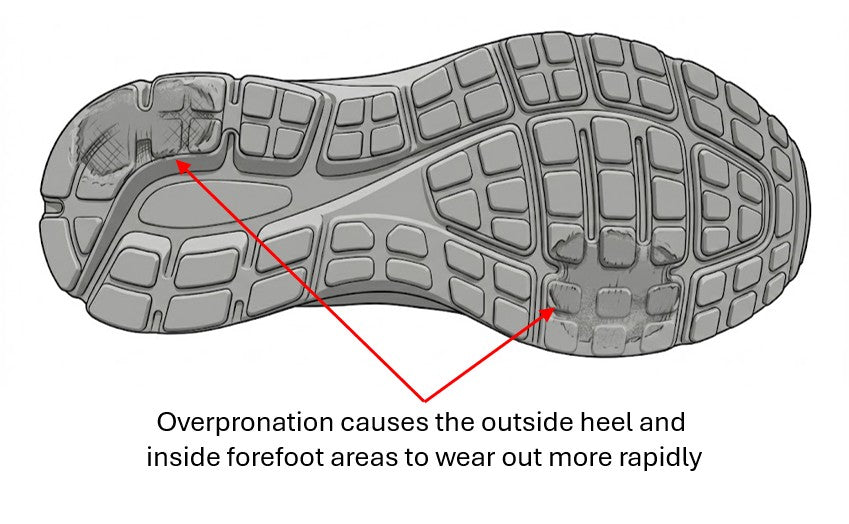
When outside heel wear appears together with inside forefoot wear, a shoe that leans inward, or recurring arch fatigue, it often points toward overpronation. That repeated inward motion can shift stress into the ankles, knees, hips, and lower back.
This is why some people first notice shoe wear, then later connect it to heel pain, plantar fasciitis, or symptoms related to flat feet and fallen arches. The main goal is to improve alignment early so each step places less strain on the wrong structures.
Quick self-check for outside heel wear
Outside heel wear becomes more meaningful when it shows up with several of the signs below.
1
Inside edge wear follows the heel wear
Heel wear alone is common. The stronger clue is a pattern that continues into the inside forefoot or inner edge of the shoe.
2
The shoe leans inward when it stands on its own
If the heel counter tilts inward on a flat surface, the shoe may be collapsing with your gait instead of supporting it.
3
You have symptoms, not just wear marks
Arch fatigue, heel soreness, unstable ankles, shin irritation, or knee discomfort matter more than the outsole pattern by itself.
If two or more of these sound familiar, do the tests below. That gives you a more reliable read than trying to interpret shoe wear in isolation.
What shoe wear can tell you
A single wear spot rarely tells the whole story. Many people contact the ground slightly on the outside heel. The more useful pattern is outside heel wear followed by inward collapse and inside edge breakdown over time.
Mild outside heel wear can be normal. The more important pattern is outside heel wear plus inward collapse and additional wear through the inside of the shoe.
Common signs the shoe is breaking down from inward collapse
Outside heel wear plus heavier wear through the inside forefoot
The arch side of the shoe looks flattened or caved inward
One shoe collapses faster than the other
The ankle appears to drift inward during walking
The shoe stands crooked when placed on a flat surface
Simple at-home tests
These are screening checks, not medical diagnosis. They help you decide whether more support is worth trying.
1) Shoe tilt check
Place the shoes on a flat surface and look from behind. If the heel leans inward and the inner forefoot also shows wear, instability is more likely.
2) Wet footprint test
Wet your foot and step onto paper or cardboard. A broad midfoot print with little inward curve may suggest lower arches and greater pronation.
3) Heel alignment check
Stand barefoot and look from behind in a mirror. If the heel visibly falls inward, that is another clue that the foot is not staying well aligned.
If these checks point toward inward collapse, the next practical step is usually not more research. It is better structure inside the shoe.
What usually helps
People often waste time jumping straight from shoe wear to replacement shoes, or from discomfort to generic stretching advice. The better sequence is usually simpler and more effective.
1) Add structure inside the shoe
If the foot rolls inward too much, cushioning alone often does not solve the problem. Support under the arch and better heel control are usually the first things to test.
2) Match the orthotic to the shoe
This is where people get it wrong. A decent orthotic in the wrong shoe can feel bulky, unstable, or useless. Shoe volume matters.
3) Improve strength and footwear over time
Orthotics can improve comfort and alignment quickly, but stronger feet, calves, hips, and more stable shoes make the result more durable.
Choose by shoe type first
Pick your starting point by the shoes you wear most
This is the simplest and most useful decision rule on the page. Do not choose by condition name first. Choose by the shoe you actually wear most often. That gives you a far better chance of getting a stable fit that you will really use.
Browse the full orthotic insoles collection and use the shoe-type rule above as your filter. That is usually more reliable than choosing by condition label alone.
What about kids?
Outside heel contact can also be normal in children. What matters is whether the foot collapses inward, the ankles roll in, the shoes break down unevenly, or your child complains of pain or fatigue after school, sports, or longer walks.
KIDS Orthotic Insoles
Best for: inward ankle rolling, flat feet, activity-related fatigue, or foot pain after school and sports
Supports stability during everyday movement
Designed specifically for children, not as a trimmed adult insole
Most useful when uneven wear, fatigue, and symptoms appear together
Watch your child stand naturally, then take a few steps. If the heels tilt inward, the ankles roll in, or the shoes seem to collapse quickly on the inside, added support may help.
For a deeper guide, see children's foot pain. If pain is persistent, worsening, or affects walking, a professional evaluation is smarter than guessing.
Related guides
If this page feels relevant, these are the next pages most likely to help.
Why do my shoes wear out on the outside heel first?
Many people land on the outside heel first, so mild wear there can be normal. It becomes more meaningful when it is paired with inward shoe tilt, inside forefoot wear, arch fatigue, or other signs of instability.
Does outside heel wear always mean overpronation?
No. Outside heel wear by itself does not prove overpronation. The stronger clue is the broader pattern, especially inward collapse after landing and additional wear through the inside edge of the shoe.
Can overpronation contribute to heel pain or plantar fasciitis?
It can. Excess inward roll may increase strain through the arch, heel, and plantar fascia. That is one reason many people start with better support inside the shoe and then work on strength and footwear.
How do I choose between Comfort, Casual, and Catwalk?
Start with the shoe you wear most often. Comfort is usually the better fit for sneakers and work boots. Casual is usually the better fit for dress shoes and tighter everyday footwear. Catwalk is the slimmest option for slim flats and very low-profile fashion shoes.
What if I am not sure whether I need orthotics?
Use the self-checks and the shoe-type selector on this page. If the pattern points to inward collapse and your symptoms match, an over-the-counter orthotic is often the most practical first thing to test.
General information only. This page does not provide medical diagnosis or treatment advice.
Shoes Wearing on Outside Heel: Normal or Overpronation?