


Comfort Orthotic Insoles
Full-length arch support insoles
Best for: sneakers and work boots

- Full-length support for roomier shoes
- Helps stabilize heel and reduce inward roll
- Great for standing and walking
If your outside heel is wearing out quickly, that can be normal. The useful question is what happens next. When outside heel wear is combined with inward collapse, inside edge wear, or a shoe that leans inward, it can point to overpronation and stability issues.
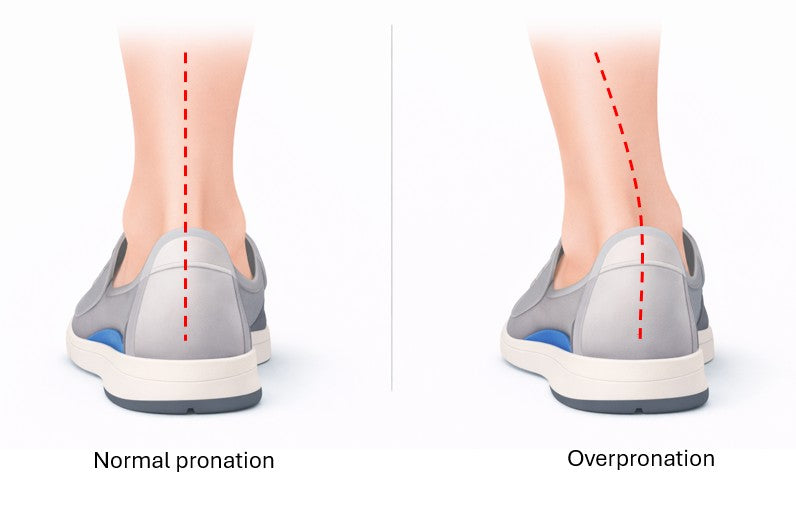
When outside heel wear is normal vs when it signals overpronation
Fast wear on the outside of the heel is not just a shoe problem. It is often a warning sign that the foot is not moving correctly with each step. In many cases, that wear pattern is linked to overpronation, where the foot rolls inward too much after landing.
Left unaddressed, this repeated inward roll can send stress up the chain and affect the entire lower body (feet, ankles, knees, hips, and lower back). It commonly shows up as foot fatigue, heel pain, or recurring aches after walking or sports. The goal is simple: support alignment early so your steps are not quietly loading the wrong joints every day.
Supportive orthotic insoles can help guide the foot into a more stable position and reduce stress with each step.
Overpronation is more likely when several of these show up together:
Many people land on the outside of the heel first. That can be normal. The more meaningful pattern is a combination of outside heel wear plus inward collapse and inside-edge wear over time.
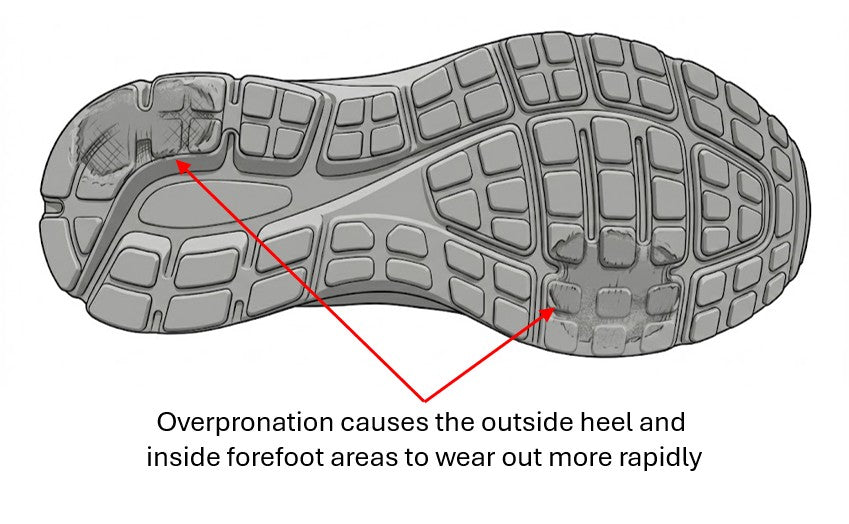
These are quick checks, not medical diagnosis. They help you decide whether additional support is worth trying.
Place the shoes on a flat surface and look from behind. If the shoe leans inward and inside forefoot wear is heavy, overpronation is more likely.

Wet your foot and step onto paper. A wide midfoot print with little inside curve suggests low arches and possible overpronation.

Stand barefoot and look from behind in a mirror. If the heel appears to fall inward, that can signal instability.

Support the arch and stabilize the heel to reduce inward collapse.
A stable heel counter and supportive midsole help the insole do its job.
Calf, foot, and hip strength helps long-term comfort and alignment.
Footminders® solutions
If your self-checks suggest inward collapse, the most practical first step is adding structure inside the shoe. Below, we switch from explanation to product guidance and show which Footminders® orthotic option is most likely to fit, based on the shoe type you wear.
You can use this guidance to evaluate any insole, even if you do not buy ours. The key is matching support to shoe volume.
Most people pick an insole based on a condition label and then end up with the wrong fit. A better approach is simpler: start with the shoe you wear most, because shoe volume determines what will fit and feel stable.
Use the table to pick a starting point. If you are between two shoe types, choose based on your most common daily pair.
Footminders® product recommendations
Full-length arch support insoles
Best for: sneakers and work boots
3/4 length arch support insoles
Best for: dress shoes and slip-ons

If you want the fastest result: match the insole to the shoe that gets the most weekly wear, then test it for a full week.
Outside heel contact can be normal for kids too. What matters is whether the foot collapses inward, the ankles roll in, or your child complains of pain or fatigue after activity. The goal is simple: improve stability so movement feels easier.
Best for: kids flat feet, inward ankle rolling, activity-related fatigue

30-day satisfaction guarantee with free returns.
Watch your child stand naturally, then walk a few steps. If the heels tilt inward and shoes wear down quickly, added support may help.

If pain is persistent, worsening, or your child limps, consider professional evaluation.
Outside heel wear can be normal. It becomes more meaningful when combined with inward collapse, inside-edge wear, or a shoe that tilts inward on a flat surface.
It can. Excess inward roll may increase strain through the arch and plantar fascia. Many people start with better structure inside the shoe and then address strength and mobility.
Choose based on shoe volume. Roomier sneakers and work boots usually fit Comfort best. Dress shoes, loafers, moccasins, and tighter slip-ons usually fit Casual best.
Some cases benefit from custom care, especially complex or persistent issues. Many mild-to-moderate cases start with high-quality over-the-counter orthotics that provide arch structure and heel stability.
General information only. This page does not provide medical diagnosis or treatment advice.

Free Shipping Over $45

Easy Return

Online Support

Secure Payment